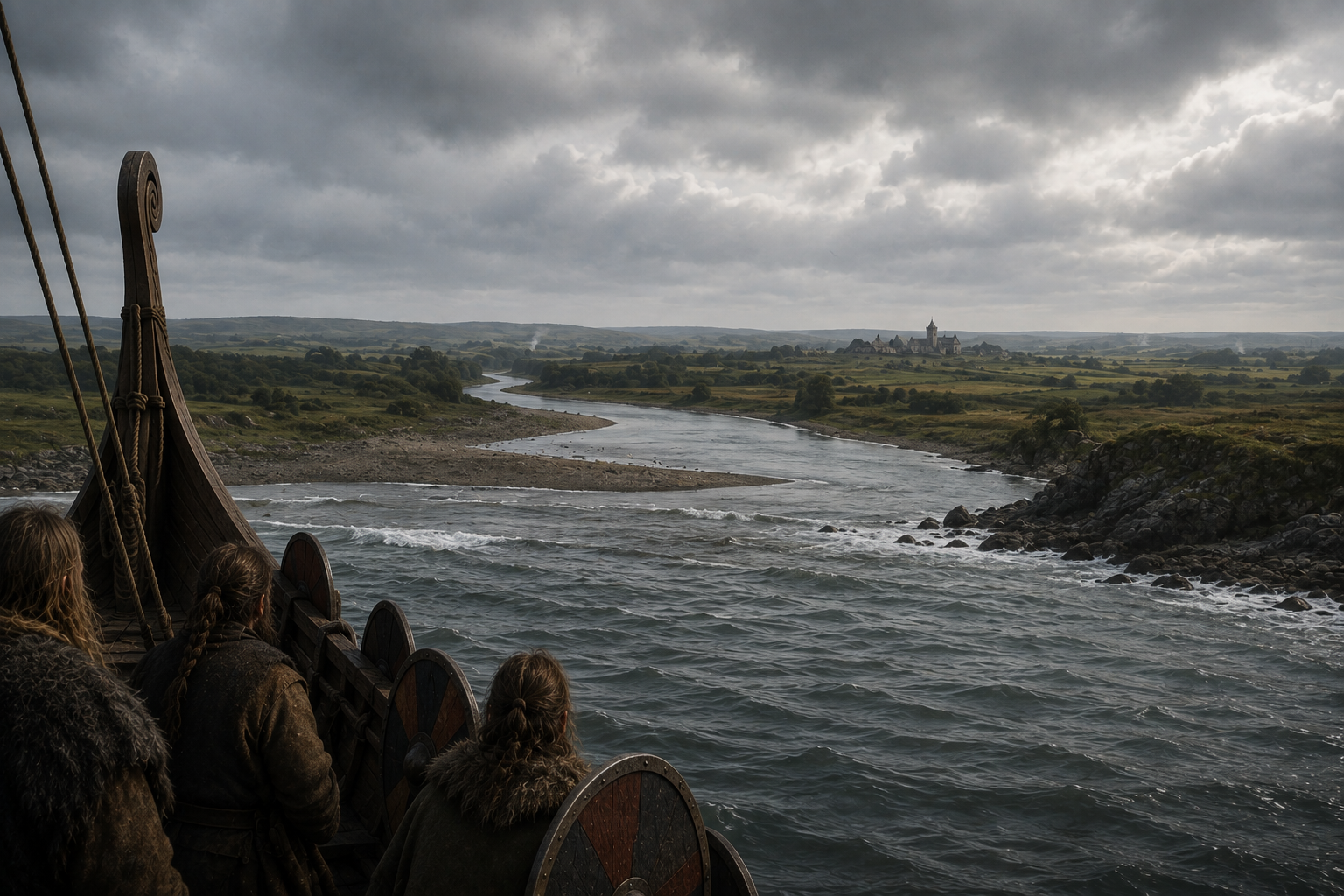
The Walk to the Water
The crew was returning from a fishing trip when they saw a lone man moving toward the beach. It was Egil Arnfinnsson. He walked slowly, without cloak or shoes, his face slack and his eyes fixed on the dark water.
They called his name. He did not answer. When they blocked his path, he tried to push between them with the blind determination of a sleeping man. The crew seized him only a few paces from the tide.
Egil woke struggling. He spoke of the same dreams that had kept him awake since the skerry: cold water overhead, pale light above, and a woman's song coming from somewhere too deep for human lungs.
They sent for Sigrid.
The Lead Box
Sigrid listened to the entire account before examining the polished whalebone woman. She would not take it in her bare hands. Whatever lived within the carving, followed it, or merely remembered it had already crossed the threshold into Ravenfjord.
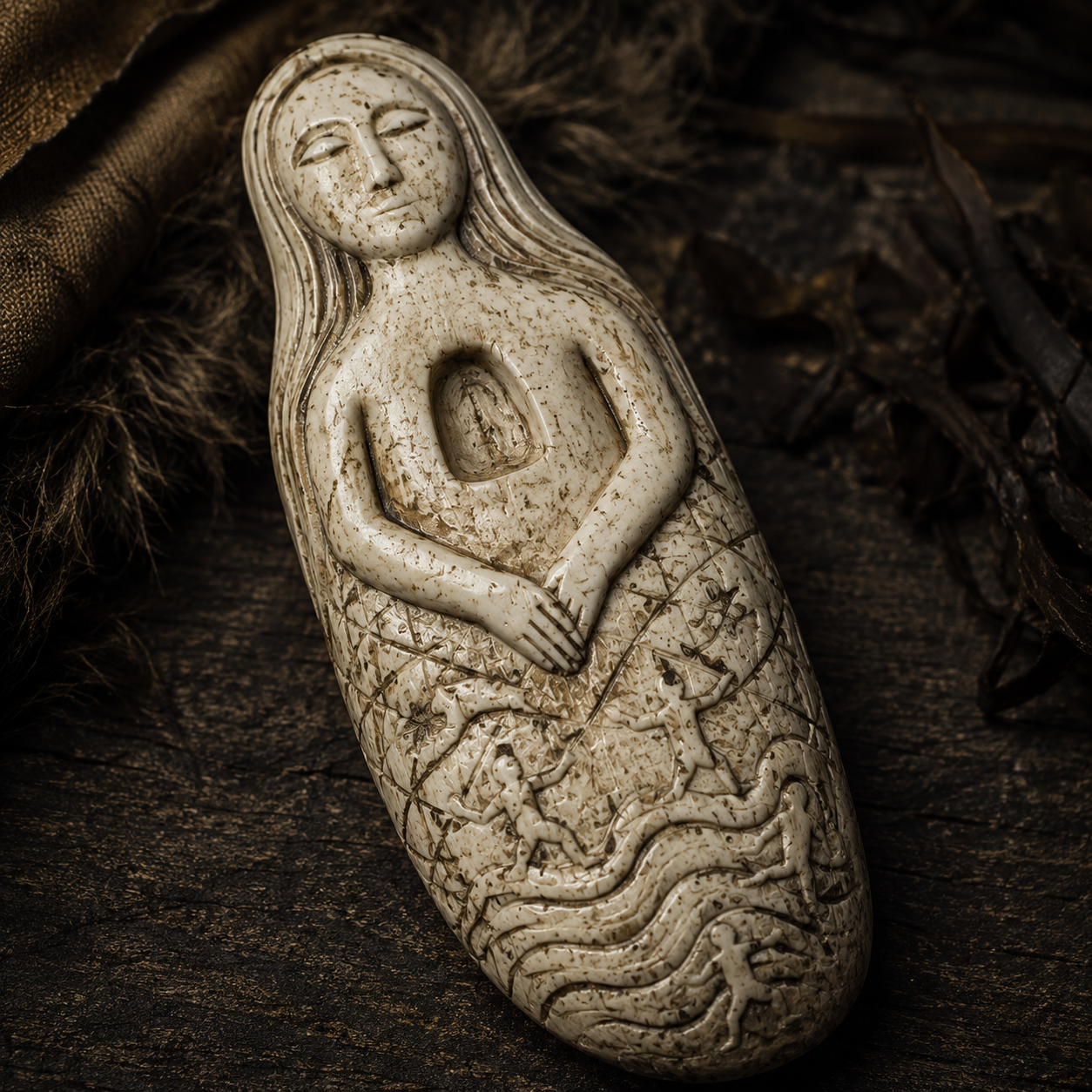
She ordered the figure sealed inside a lead box. Lead would not end its influence, but it might weaken the call and buy them time.
By morning the outside of the closed box was wet with salt water.
A Sail Beyond the Fjord
Not long afterward, watchers spotted an unfamiliar ship holding beyond Ravenfjord. After Saint Bega, an English sail could mean merchants, spies, or armed men following the trail of stolen church silver.
The repaired Sea Raven went out to meet it. The two ships held apart on the open water while shields remained within reach and hands rested near spear shafts. Oswin helped carry words across the gap.
The stranger was the Grey Whale, commanded by Eadric Oswulfson. Eadric said he had come to trade, not avenge monks. The Norse answered that peaceful men would be received peacefully, but no foreign ship would enter Ravenfjord unexamined.
After careful words, the English lowered a small boat. Godwine, Osmund, and an armed escort rowed toward the harbor carrying dyed cloth and imported wine as gifts for Jarl Eirik.
Strangers at Eirik's Hall
The first meeting was stiff. Godwine presented Eadric's gifts. Eirik asked what an English captain expected to find so far north. Osmund named furs, hides, antler, whetstones, iron, and anything rare enough to sell twice.
Caution slowly gave way to curiosity. More of the merchant crew came ashore. Ravenfjord's people crowded the waterfront to examine colored cloth, pottery, worked metal, salt, grain, ornaments, and wine. Englishmen tasted northern ale. Children stared at foreign buckles. Sailors compared knives and lied about storms.
Osmund was pulled from one bargain to another until he raised both hands and protested:
“Too many Norsemen. Not enough Osmund.”
By evening the harbor looked less like the edge of two hostile worlds and more like a market that had always meant to exist.
The Spring Agreement
Before the Grey Whale departed, Eadric and Jarl Eirik reached a personal agreement. Their ships and crews would recognize one another as friends for trade. Eadric would return the following spring.
It was not peace between England and Norway. Neither man possessed the power to promise that. It was a narrower oath between two captains and two communities, practical enough to survive where grander words might fail.
Ravenfjord began preparing almost immediately. Good hides were set aside instead of used. Antler, iron, soapstone, whetstones, and fine furs were collected for the spring market. For the first time, the village was not merely waiting to see what foreign ships brought. It was preparing goods specifically for their return.
The Raven Takes the Wind
At last Einar pronounced the Sea Raven sound. Water, dried food, rope, tools, shields, weapons, and empty sacks went aboard. Men tested the new rigging with their weight and checked every repaired seam.
The Red Serpent was already tied at the dock, unloaded after her own voyage. Her crew leaned on rails and offered advice no one had requested. They were rivals, not the center of this story. The Sea Raven answered with a few insults, pushed away from the pier, and left them behind.
Across the Whale-Road
Morning gave them a good wind. Ravenfjord dwindled behind the stern until the hills became a dark line and then disappeared entirely.
The North Sea crossing took three days. Arnor watched sun, swell, and birds while Ivar worked the sail through shifting winds. Rain passed over them in hard gray curtains. At night the crew slept among shields and cargo while the hull moved beneath them like a living thing.
When England appeared beneath the haze, Oswin brought out Aldwin's map. They found the river mouth and turned inland.
Into England
The sea swell weakened behind them. Salt marsh gave way to muddy banks, reeds, willow, and fields glimpsed beyond the trees. The crew lowered the sail when the bends tightened and used oars to keep the ship clear of roots and shallows.
They passed fishing places, narrow animal tracks, and distant smoke without seeing a settlement. Every bend hid the next stretch of water. The map promised a navigable road inland. It did not promise an easy one.
Then the river changed.
The Ford
A shelf of stone crossed the channel. The current spread thin over gravel bars, and dark rocks waited just beneath the surface. The crew had expected mud, bends, perhaps a fallen tree. They had not expected the river itself to become a road.
The Sea Raven could not simply row through. Men went into the cold water to sound a channel. Ropes were carried forward. Others pushed against the hull while those aboard shifted weight and protected the keel from stone.
For a moment the ship held fast. Feet slipped backward. Water climbed around knees and thighs. Then the hull moved, scraped once, and floated into deeper water.
“That's how you move a ship.”
The Empty Landing
Beyond the ford they found a river landing that should have been busy. A dock projected from the bank. A rough shack stood nearby. Barrels, sacks, and bundled goods waited beneath a shelter beside a cart, but no merchant, guard, or laborer remained.
The crew searched the landing and listened for movement. Finding no immediate threat, they carried the abandoned cargo aboard the Sea Raven. It might be worth silver, and empty space earned nothing.
They understood the bargain. If Saint Cuthbert held richer treasure, the landing goods could be dumped to make room. For now, they took everything they could carry.
A track led inland. The monastery lay roughly half a mile away.
Ravens Over Saint Cuthbert
The crew left guards with the ship and marched through fields and woodland. When Saint Cuthbert finally rose above the trees, black shapes were circling its bell tower.
Ravens.
The Norse watched them wheel above the Christian stones and accepted the sight as a good omen. The raven had crossed the sea before them. Whatever gods ruled this coast, Odin's birds were already waiting.
The raiders crossed the exposed ground, climbed the wall, confronted the monks, and entered the church with Oswin beside them.
Silver lies within reach. Frightened brothers wait nearby. Oswin is trying to keep robbery from becoming slaughter. Outside, the road remains quiet, but the bell has not yet told the countryside what has come.